
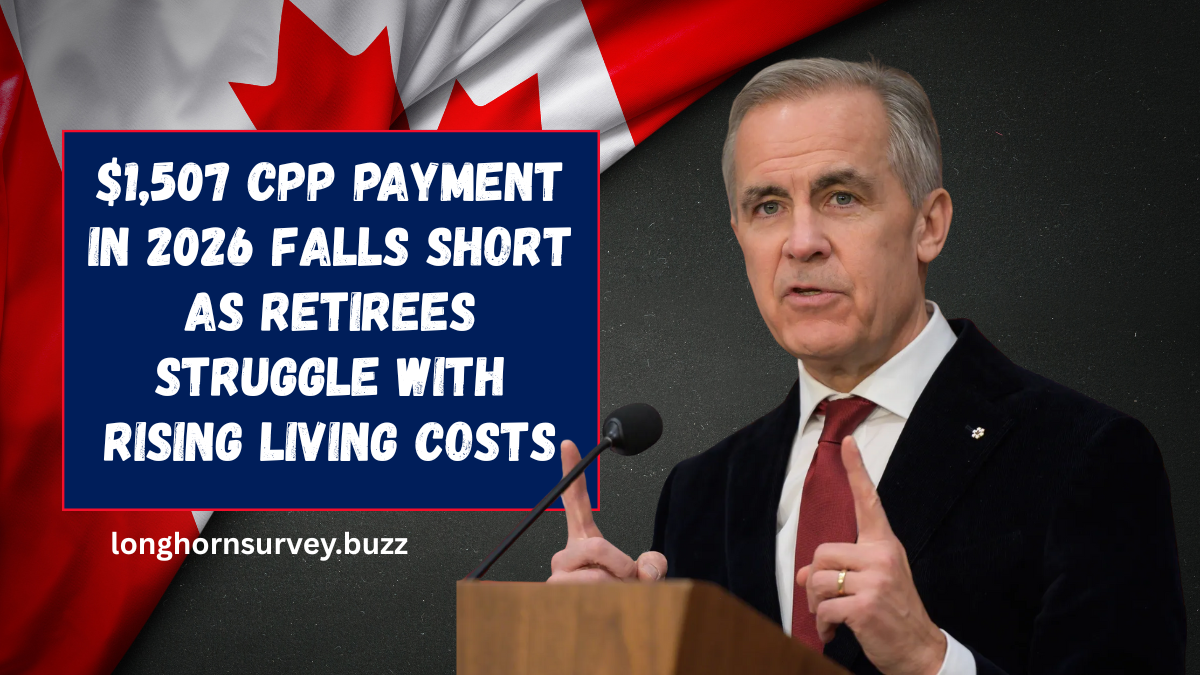
Canada’s Canada Pension Plan (CPP) payments have increased again in 2026, but for many retirees, the latest adjustment offers limited relief at a time when everyday expenses remain stubbornly high.
From January 2026, the maximum monthly CPP payment at age 65 is $1,507.65, up from $1,433 in 2025. That reflects a 2% increase, which is noticeably smaller than last year’s 2.6% hike. While inflation has cooled overall, seniors and advocacy groups argue that the cost pressures retirees face have not eased at the same pace.
Also Read


CPP Payment Increase: 2025 vs 2026
| Year | Maximum Monthly CPP (Age 65) | Annual Increase |
|---|---|---|
| 2025 | $1,433.00 | 2.6% |
| 2026 | $1,507.65 | 2.0% |
The lower increase is tied directly to slowing inflation, since CPP benefits are adjusted annually based on changes in consumer prices.
Why the CPP Increase Is Smaller in 2026?
CPP adjustments are linked to inflation data measured by Statistics Canada, using the Consumer Price Index (CPI).
For the 2026 adjustment, inflation was calculated using price changes from November 2024 to October 2025. Because inflation cooled during that period, CPP payments rose by less than in previous years.
The goal of this system is to protect retirees’ purchasing power. However, critics say the formula does not fully capture the financial reality seniors face.
Seniors Feel the Squeeze Despite Lower Inflation
Although headline inflation slowed, many essential costs remain elevated compared with pre-pandemic levels. Items that matter most to seniors—such as groceries, housing, fuel, health care, and transportation—continue to rise faster than average inflation.
For example, while overall inflation hovered around 2.2%, grocery prices increased by 4.7%, marking one of the sharpest food price jumps since late 2023.
Advocacy groups warn that this gap leaves retirees with difficult choices, including:
- Reducing home heating to save on utility bills
- Buying discounted or near-expiry food
- Cutting back on social activities
- Leaving home less often due to transportation costs
These trade-offs raise concerns not only about financial security, but also about social isolation and loneliness among seniors.
Should CPP Be Linked to a Different Inflation Measure?
Some experts argue that CPP increases should be based on an inflation index designed specifically for seniors. Such a measure would give more weight to necessities like:
- Food and groceries
- Housing and utilities
- Medical expenses
- Transportation
Supporters say this approach would better reflect how retirees actually spend their money, rather than relying on a broad consumer basket.
Managing Retirement Income When CPP Falls Short
CPP is only one part of a retiree’s income. The rest often comes from personal savings, pensions, and investments. Financial planners warn that rising costs make careful planning more important than ever.
Key Retirement Planning Tips
| Strategy | Why It Matters |
|---|---|
| Maintain a cash buffer | Covers short-term expenses without selling investments |
| Avoid holding too much cash long-term | Cash often fails to keep up with inflation |
| Review budgets regularly | Identifies areas to cut discretionary spending |
| Limit credit card use | High interest can quickly erode savings |
| Focus on inflation-beating growth | Helps ensure savings last through retirement |
Experts caution that being overly conservative with investments can be risky. While cash feels safe, it may not grow fast enough to support long retirements in a high-cost environment.
The Bigger Picture for Retirees in 2026
The $1,507.65 maximum CPP payment provides a modest increase, but many retirees say it does not match real-world expenses. With essentials still costly, seniors may need to rely more heavily on savings, adjust their lifestyles, or rethink long-term retirement plans.
As living costs continue to evolve, pressure is likely to grow for reforms that better align retirement benefits with the true cost of aging in Canada.
FAQs
What is the maximum CPP payment for 2026?
The maximum monthly CPP payment at age 65 in 2026 is $1,507.65, up from $1,433 in 2025.
Why did CPP increase by only 2% in 2026?
The increase reflects slower inflation, since CPP adjustments are tied to annual Consumer Price Index changes.
Does CPP fully cover rising living costs for retirees?
Many retirees say no, as essentials like groceries and housing continue to rise faster than overall inflation.